
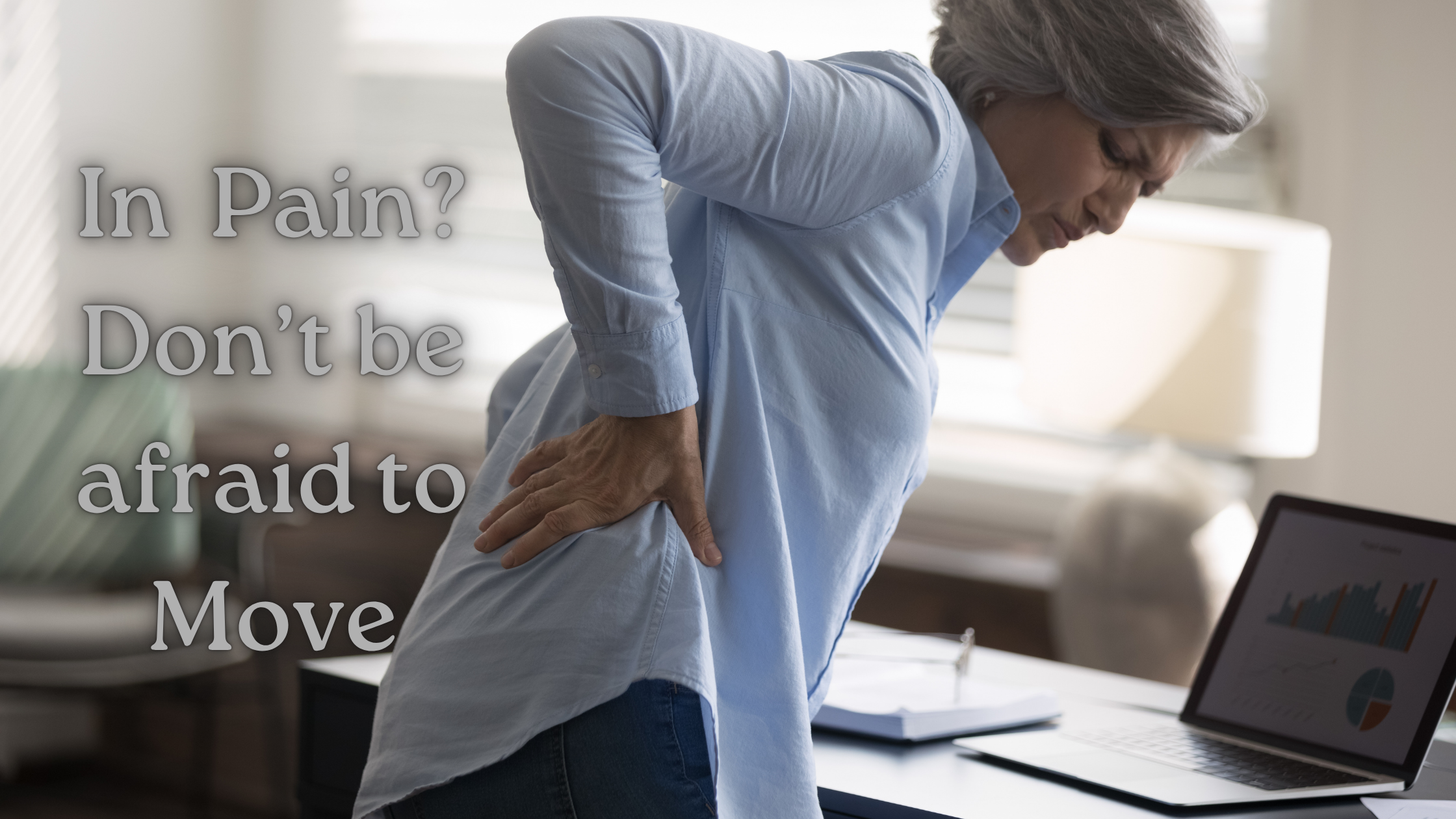
In Pain? Don’t Be Afraid to Move
Why Movement Is One of the Best Medicines for Pain
"It hurts, so I should probably rest."
It's one of the most common thoughts people have when they're in pain. It makes sense. Pain is our body's alarm system, warning us that something isn't right.
But here's what decades of research have taught us:
Pain doesn't always mean damage, and avoiding movement for too long can actually make pain worse.
Pain Was Designed to Protect You
Pain is incredibly important. If you sprain your ankle or break your arm, pain tells you to stop using it long enough for healing to begin.
During the acute phase of an injury—generally the first few days after a significant injury—rest, protection, and allowing the tissues to heal are appropriate. This is why your healthcare provider may recommend temporarily modifying activity.
But after those initial stages, something interesting happens.
The tissues often begin healing faster than our confidence returns.
Many people continue to move less because they're afraid they'll make things worse.
Unfortunately, prolonged inactivity can create a whole new set of problems.
The Cost of Not Moving
When we stop moving, our bodies begin adapting almost immediately.
Muscles lose strength.
Joints become stiffer.
Fascia loses elasticity.
Balance declines.
Endurance decreases.
The nervous system can become even more sensitive to pain.
It's a cycle many people know all too well:
Pain → Less movement → More stiffness and weakness → More pain → Even less movement.
The good news?
That cycle can work in the opposite direction, too.
Movement Helps Calm the Pain System
Researchers now understand that exercise doesn't just strengthen muscles—it changes how the nervous system processes pain.
Regular, appropriate movement has been shown to:
Reduce pain sensitivity
Improve circulation and tissue healing
Lubricate joints with healthy synovial fluid
Decrease inflammation over time
Improve sleep quality
Reduce stress hormones
Increase natural pain-relieving chemicals like endorphins
Improve mood and confidence
Scientists even have a name for one of these effects: Exercise-Induced Hypoalgesia (EIH)—the body's natural ability to reduce pain after exercise.
For many people living with persistent pain, exercise acts almost like a natural pain medication, without many of the side effects.
Why Pilates Is Different
At P31 Pilates, we often meet people who tell us:
"I'm afraid to exercise because I don't want to make my back worse."
"My knees hurt too much."
"I'm worried I'll do something wrong."
Those fears are understandable.
That's why Pilates can be such an effective place to begin.
Pilates emphasizes:
Controlled, intentional movement
Proper alignment
Core stability
Mobility before intensity
Breath control
Gradual progression
Rather than pushing through pain, we work with your body—helping you rebuild strength, confidence, and trust in movement.
Many clients are surprised by how much better they feel simply because they're moving again. Physically, Mentally and Emotionally.
If you have been afraid to move because of pain, call us for a free consultation. Let us help you understand how movement might be your best medicine.
Call Wendy at 816-812-5446
Wendy is a Registered Nurse, Corrective Exercise Specialist, Wellness Coach and Pilates Instructor specializing in Injuries and Special Populations.